Affiliate disclosure: some links in this article are affiliate links, which means I may earn a small commission if you buy through them, at no extra cost to you. It never changes what I recommend.
There was a season after fifty when my life went from beige to green.
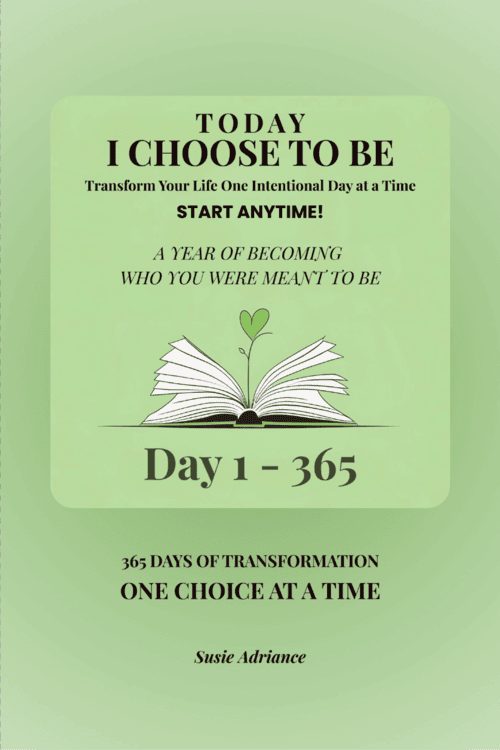
For years I’d been in “maintenance mode” show up, perform, power through. The inside felt wintery: tidy, efficient, a little barren. Then something shifted. I started writing *Today I Choose to Be…* as a small daily practice, just one seed at a time. And suddenly the ground of my life woke up.
Ideas sprouted faster than I could capture them, entries became a calendar, the calendar became book drafts, posts branched into carousels and reels. I’d sit down to write one thought and three more would leaf out from the stem. It felt less like forcing content and more like discovering I’d been composting for years. Wayne Dyer talks, dog-eared pages, quiet journaling, hard-won boundaries, all breaking down into rich soil.
The verdancy wasn’t only creative. My marriage with Curtis deepened in a way that felt like spring after a long, dry season, steady, shaded, spacious. With my daughter-in-laws, I learned to stop “landscaping” relationships and start tending them, less pruning for my preferences, more watering what mattered to them. Even work shifted: fewer heroic sprints, more healthy systems; fewer weeds of people-pleasing, more trellises of clear yes/no.
Living in Florida, I think of the mangroves my son once sculpted into that beautiful mailbox, roots drinking brackish water and still throwing up new shoots. That’s how verdant felt: drawing nourishment from imperfect conditions and growing anyway.
If there was a “how,” it was simple, earthy stuff:
**Weeding:** pulling out the old belief that love requires drama, the perfectionism that chokes new growth, the habit of overcommitting every patch of daylight.
**Watering:** unitasking, sleep, walks, broth-level self-care on hard days, five honest sentences in my journal even when the page felt dry.
**Light:** gratitude before metrics, choosing calm over chaos, protecting mornings so the tender shoots didn’t get trampled.
Nothing about it was instant, but one day I looked around and realized, this is lush. Not flashy, not manicured. Alive.
That’s my verdant season: the years when what I’d been quietly tending finally rooted, when creativity climbed the trellis, when relationships grew shade, and when the life I was cultivating turned unapologetically green.
The Transition from Maintenance to Growth
The shift from “maintenance mode” to verdant living represents a fundamental change in how you approach life energy and priorities. Maintenance mode focuses on preservation, efficiency, and meeting obligations, keeping things running smoothly but not necessarily flourishing or expanding.
Verdant living, by contrast, involves intentional cultivation of growth, creativity, and vitality. It requires shifting from just managing what exists to actively nurturing what wants to emerge. This transition often begins with recognizing that mere survival or competent functioning isn’t sufficient for a satisfying life.
The move toward verdancy often involves reallocating energy from activities that drain or deplete toward those that nourish and generate new possibilities. Like deciding to plant a garden rather than just maintaining a lawn, it requires investment in long-term flourishing rather than just short-term management.
The Composting Principle
Perhaps the most profound insight from my verdant season was recognizing how years of seemingly unproductive experiences had been quietly decomposing into rich soil for future growth. The Wayne Dyer talks, journaling sessions, and hard-won boundaries hadn’t felt particularly generative at the time, but they had been creating the internal conditions necessary for creative abundance.
This composting principle suggests that apparent fallow periods often serve essential preparation functions for future flourishing. Experiences that don’t immediately produce visible results may be breaking down into the nutrients that will support later growth.
Understanding this composting process helps you trust periods of apparent unproductivity and appreciate that growth often requires extended preparation that happens below the surface before becoming visible.
Organic vs. Forced Growth
The difference between forcing content and discovering natural abundance reflects a crucial distinction in how verdant living operates. When growth feels forced, it typically drains energy and produces results that feel artificial or unsustainable. But organic growth feels more like discovering what’s already trying to emerge.
This organic quality often characterizes verdant periods, ideas, opportunities, and developments seem to arise naturally rather than through intense effort or willpower. The energy feels generative rather than depleting, creating momentum for continued growth rather than exhaustion that requires recovery.
Learning to distinguish between forced and organic growth helps you align with natural rhythms and capacities rather than trying to produce results through sheer determination.
Systemic Verdancy
True verdancy rarely remains isolated to just one area of life, it tends to spread throughout interconnected systems. My creative awakening influenced relationship approaches, work patterns, and personal care practices, creating comprehensive vitality rather than just localized improvement.
This systemic quality suggests that verdant living involves whole-life integration rather than just compartmentalized enhancement. When you begin tending one area with genuine care and attention, the principles and energy often naturally extend to other domains.
Like the way learning to tend relationships differently affected work dynamics, verdant practices in one area often teach approaches that enhance flourishing throughout your life.
The Mangrove Metaphor
The image of mangroves drawing nourishment from brackish water while producing new growth captures something essential about verdant living, the ability to thrive even when conditions aren’t perfect. Rather than waiting for ideal circumstances, verdancy involves learning to extract what you need from whatever environment you find yourself in.
This adaptability becomes particularly valuable as life presents increasingly complex circumstances that rarely provide pure, unambiguous conditions for growth. The ability to find nourishment in mixed conditions, extracting value from difficult experiences, finding opportunities within constraints, supports sustainable flourishing.
Like mangroves that create their own ecosystem while adapting to challenging conditions, verdant living often involves both working with circumstances and actively creating more favorable conditions for continued growth.
The Three Pillars: Weeding, Watering, Light
The practical approach to cultivating verdancy involves three essential activities that mirror good gardening practices: removing what inhibits growth, providing what nourishes development, and ensuring adequate conditions for flourishing.
**Weeding** involves identifying and removing patterns, beliefs, or commitments that drain energy or prevent healthy development. This might mean eliminating perfectionist standards that inhibit creativity, boundary-setting with people who consistently take more than they give, or reducing activities that feel obligatory but not meaningful.
**Watering** includes all the small, consistent practices that provide nourishment for growth, adequate rest, reflective time, physical care, creative expression, and meaningful connection. These practices often feel simple or even indulgent but provide essential nutrients for sustained vitality.
**Light** represents the mental and emotional conditions that support flourishing, gratitude, optimism, protected time for what matters, and conscious choices to prioritize growth over merely productive busyness.
Timing and Patience in Verdant Development
Perhaps the most challenging aspect of cultivating verdancy is accepting that meaningful growth operates on natural timelines rather than forced schedules. The shift from beige to green in my life happened gradually, with barely perceptible daily changes that accumulated into obvious transformation over months and years.
This gradual development requires patience with process and faith in practices that may not produce immediate visible results. Like tending a garden, verdant living involves consistent small actions that support conditions for growth rather than trying to force dramatic changes quickly.
Learning to appreciate incremental progress and trust in organic timing becomes essential for sustainable verdancy rather than the boom-and-bust cycles that often characterize forced approaches to improvement.
Practical Strategies for Cultivating Verdancy
While verdant living emerges naturally when conditions are right, specific practices can support the development of those favorable conditions.
Regular composting practices. Like my journaling and reflection time, maintain activities that process experiences and convert them into useful insights and understanding.
Conscious weeding. Regularly examine commitments, relationships, and habits to identify what supports versus what depletes your energy and vitality.
Consistent watering. Develop sustainable practices that provide ongoing nourishment, rest, creative expression, meaningful work, and authentic connection.
Light protection. Guard time and attention for what truly matters rather than allowing every moment to be claimed by urgent but less important demands.
Seasonal awareness. Recognize that growth happens in cycles, with periods of apparent dormancy that are actually essential preparation for future flourishing.
Verdancy in Different Life Domains
The principles that supported my comprehensive verdant season can be applied to specific areas of life that might benefit from more intentional cultivation.
Creative verdancy: Moving from consuming others’ creativity to actively generating your own original expression and ideas.
Relational verdancy: Shifting from maintaining existing connections to actively cultivating deeper intimacy and understanding.
Professional verdancy: Evolving from just competent performance to work that feels genuinely meaningful and generative.
Spiritual verdancy: Growing beyond routine practices toward authentic engagement with questions of meaning and purpose.
The Gift of Unapologetic Aliveness
Perhaps the most profound aspect of verdant living is the permission it gives you to be unapologetically alive, to prioritize vitality, growth, and flourishing rather than just efficient management of responsibilities and obligations.
This aliveness often challenges cultural messages about appropriate behavior for various life stages, professional contexts, or social roles. But verdant living trusts that genuine vitality serves not just personal satisfaction but also enhances your capacity to contribute meaningfully to others’ lives.
Like the way my verdant season enhanced both creative output and relationship quality, authentic flourishing typically creates positive ripple effects that benefit everyone in your sphere of influence.
Today, I choose to continue cultivating the conditions that support verdant living, weeding what depletes, watering what nourishes, and protecting the light that allows genuine flourishing to occur naturally and sustainably.
Because life is too precious to spend just maintaining what exists when you could be actively cultivating what wants to emerge and grow.
“Today I Choose to Be” – 365 Daily Intentions →
✨ More Daily Intentions:
- → Today I Choose to be Teeming
- → Today I Choose to be Bright
- → Today I Choose to be Intimate
- → Today I Choose to be Beaming
- → Today I Choose to be Improving
📚 Get the Complete Guide: “Today I Choose to Be” – 365 Daily Intentions
If I’d known verdant would look this quiet, I’d have started my year-long daily intentions project sooner. Turns out the small attributes are the ones that rearrange something when I’m not looking.